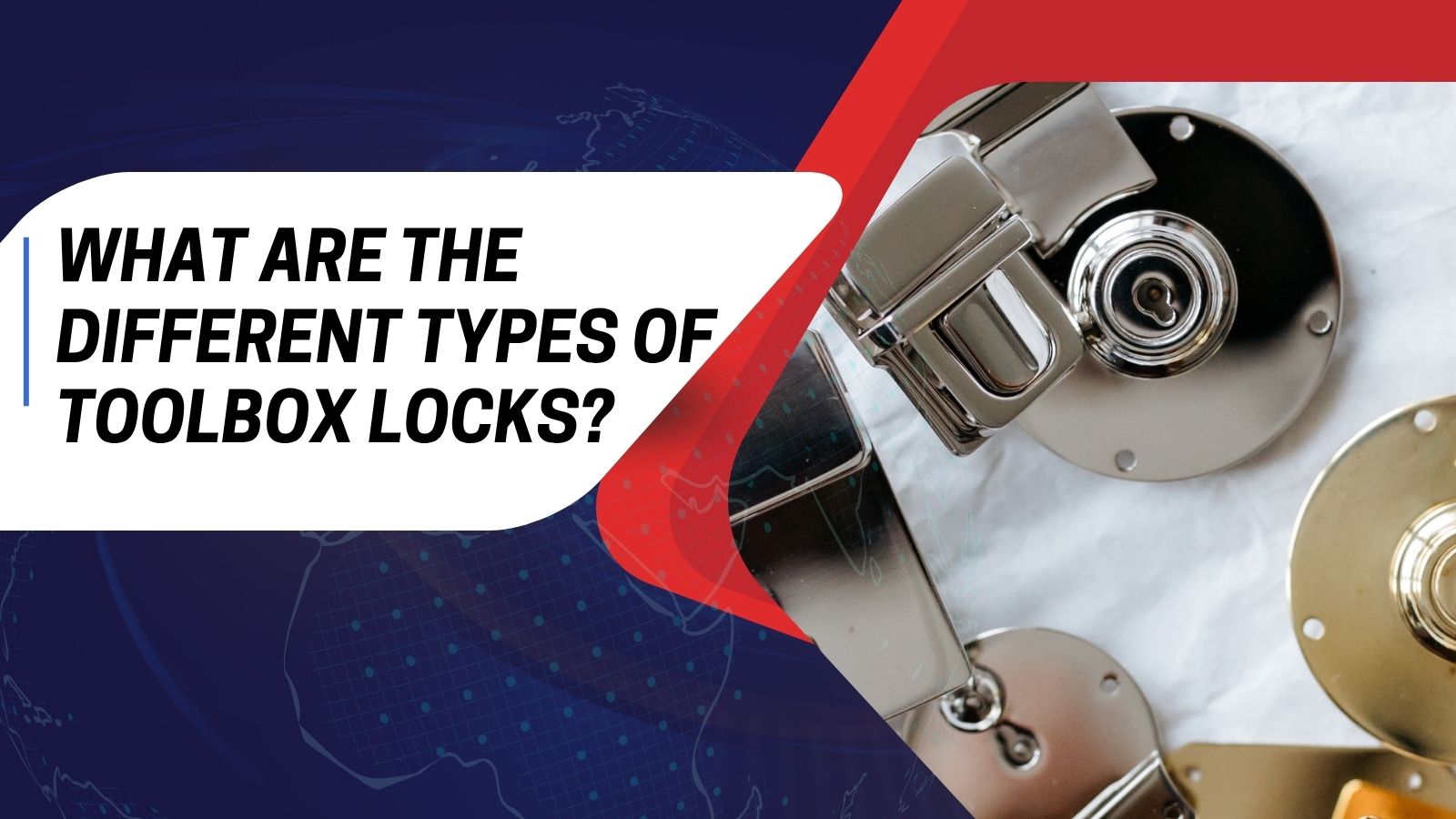
What Are the Different Types of Toolbox Locks?(Comprehensive Guide)
When it comes to securing your valuable tools, understanding the different types of toolbox locks is absolutely essential. Whether you are a professional tradesperson safeguarding expensive equipment, a DIY enthusiast organizing a home garage, or a fleet manager maintaining utility trucks, the security of your toolbox dictates your peace of mind.
East Sea Machinery, a trusted name in manufacturing high-quality locks, latches, and hinges for toolboxes, trucks, and special vehicles since 2002, offers a comprehensive range of robust locking solutions. In this guide, we will explore the varied types of toolbox locks available on the market, their unique features, and how you can select the perfect security mechanism for your specific storage needs.
Table of Contents
II. 8 Common Types of Toolbox Locks
III. Toolbox Locks Comparison Table
IV. Choosing the Right Toolbox Lock
V. Installation Tips for Toolbox Locks
Why Toolbox Locks Matter
Toolbox locks function as much more than just a physical barrier against theft. They protect your specialized tools from severe environmental damage (like rust and water exposure), keep your compartments highly organized during transit, and prevent unauthorized access by untrained personnel, children, or pets.
Investing in a high-quality lock ensures your tools remain exactly where you left them, whether stored in an indoor workshop, a bumpy flatbed truck, or a bustling construction site. Choosing industrial-grade options, such as those provided by East Sea Machinery, means equipping your storage with durable, corrosion-resistant mechanisms designed explicitly for demanding, high-risk environments.
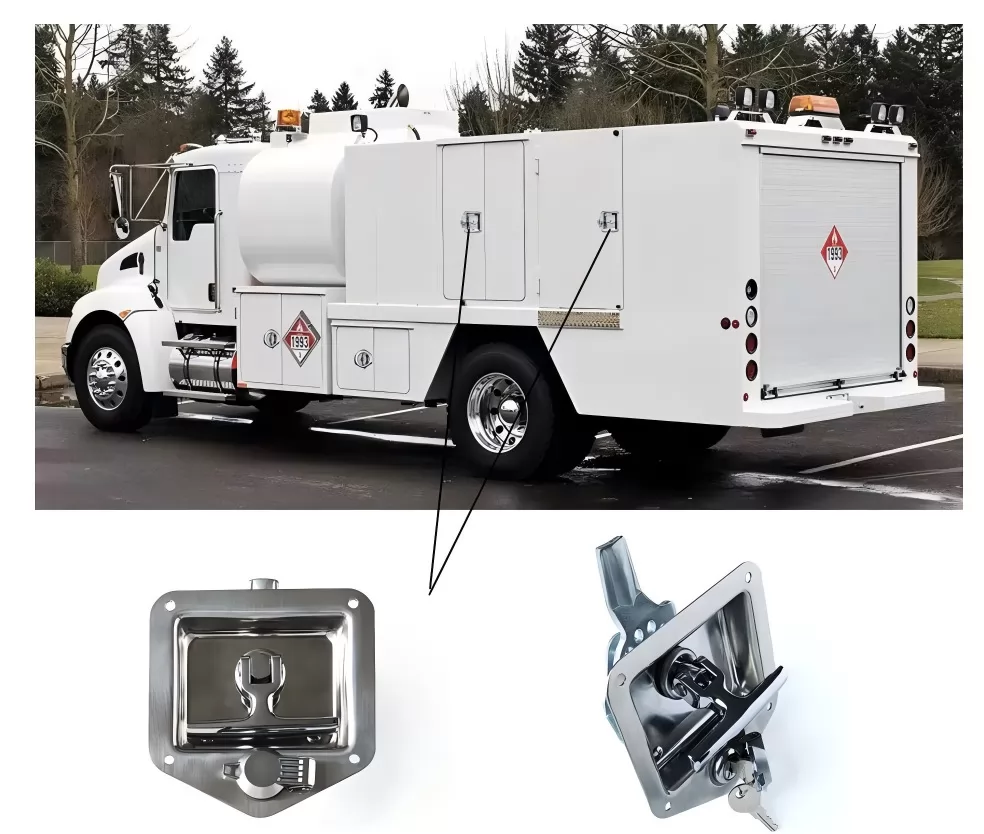
8 Common Types of Toolbox Locks
Because no two toolboxes are exactly alike, locking mechanisms come in various designs. Each offers distinct benefits tailored to your security requirements, toolbox material, and daily usage environment. Below is a detailed breakdown of the most popular types of toolbox locks:
1. Padlocks
Padlocks are a highly versatile and traditional option for securing portable toolboxes and job-site chests. Usually manufactured from hardened materials like stainless steel, brass, or boron alloy, they are highly resistant to cutting, sawing, or picking.
- Pros: Easy to use, portable, and cost-effective. You can switch them between different boxes easily.
- Cons: Lower-end models may not provide adequate security against skilled lock pickers or bolt cutters.
- Best for: General-purpose toolboxes in low-to-medium-risk environments.
2. Cylinder Locks
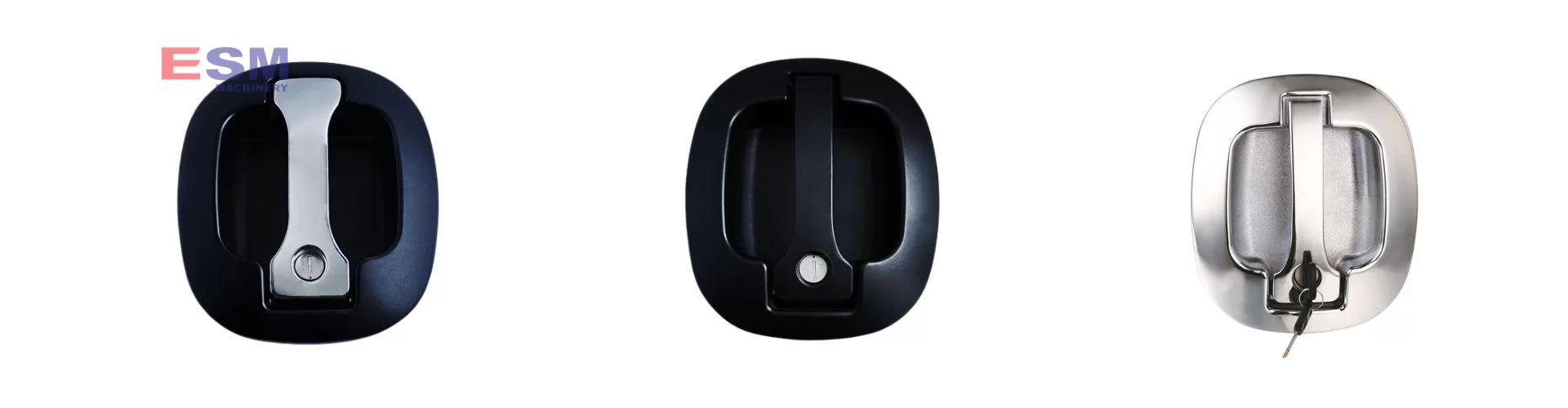
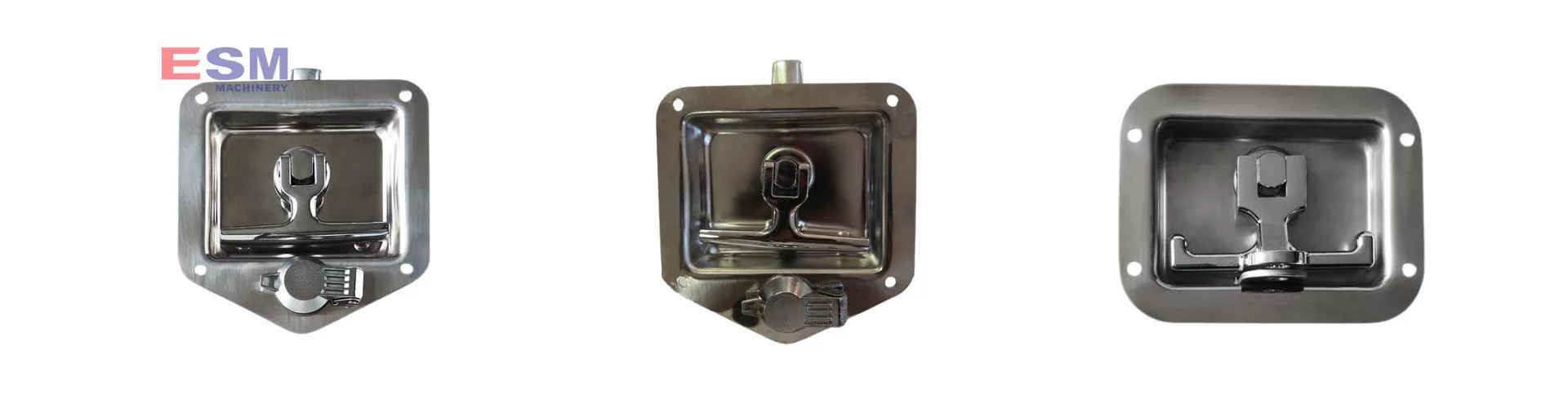
Cylinder locks are a classic and highly integrated choice for built-in toolboxes, often utilized alongside paddle handles or T-handle latches. These locks feature a cylindrical core that rotates with a specific key. They are a staple in the trucking and logistics industries.
- Pros: Simple to install and replace. They sit flush against the box, reducing the risk of being pried off.
- Cons: Basic pin-tumbler designs can be vulnerable to picking if they lack security pins.
- Best for: Truck toolboxes, cross-bed storage, and heavy-duty transport systems.
3. Cam Locks
Cam locks are straightforward mechanisms commonly found in lighter-duty toolboxes or smaller interior compartments. They utilize a rotating metal cam (or arm) to secure the door or lid to the frame, activated by a simple key turn.
- Pros: Highly compact, affordable, and easy to install in tight spaces.
- Cons: Limited structural strength makes them unsuitable for high-risk, outdoor environments.
- Best for: Indoor tool storage, small drawer units, or low-value items.
4. Tubular Locks
Tubular locks (sometimes called radial locks) feature a circular keyway. Because their internal pins are arranged in a circle, they offer significantly higher security and pick-resistance than standard flat-key cylinder locks.
- Pros: Extremely difficult to pick or drill out, offering superior high-security protection.
- Cons: Less versatile, and replacing or duplicating keys often requires specialized equipment.
- Best for: High-security toolboxes, vending machines, and exposed outdoor storage units.
5. Combination Locks
Combination locks completely eliminate the need for physical keys, relying instead on a numeric or alphanumeric dial/keypad. They are highly favored by users who need quick access or frequently share tool access with a team.
- Pros: No keys to lose, easy to share access codes with co-workers.
- Cons: Codes can be forgotten, and mechanical dials can sometimes jam if exposed to heavy dust.
- Best for: Professionals needing quick, keyless access and shared team toolboxes.
6. Electronic Locks
Electronic locks represent the cutting edge among the various types of toolbox locks. They offer keyless entry via digital keypads, Bluetooth smartphone apps, or even biometric fingerprint scanners.
- Pros: Ultimate convenience, high security, and trackable access logs (on smart models).
- Cons: Higher initial cost and reliance on battery power/electronic components.
- Best for: High-value precision tools, fleet management, and tech-integrated storage systems.
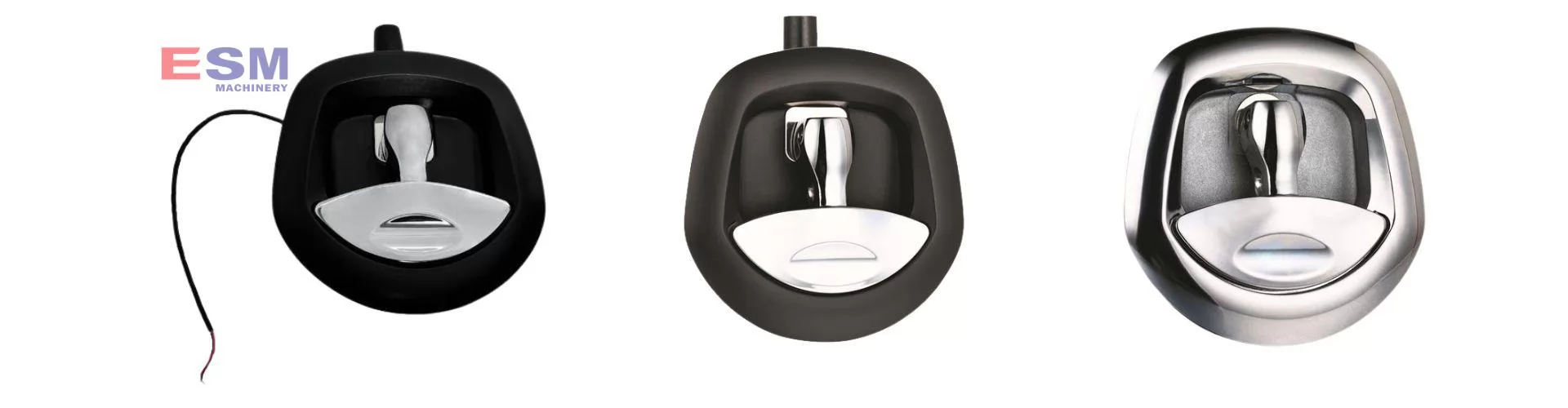
7. Whale Tail Compression Locks
Whale tail compression locks are a premium, heavy-duty choice primarily designed for truck canopies, UTEs, and service bodies. Made from high-grade aluminum or zinc alloy, they pull the toolbox door tight against the weather seal when closed.
- Pros: Exceptional weather and dust sealing, highly durable, and highly secure against prying.
- Cons: Requires a larger mounting footprint and represents a higher price point.
- Best for: Outdoor toolboxes, off-road vehicles, and truck canopy storage systems.
8. Central Locking Systems
Central locking systems secure multiple drawers or compartments simultaneously with a single turn of a key or press of a button. They use an internal locking bar that engages all drawers at once.
- Pros: Massive time-saver; secures an entire multi-drawer cabinet instantly.
- Cons: Complex internal installation; if the main lock fails, all drawers remain locked.
- Best for: Large rolling tool chests, machinist toolboxes, and workshop cabinets.
Toolbox Locks Comparison Table
To help you quickly identify the best hardware for your setup, reference this quick comparison of the main types of toolbox locks:
| Lock Type | Best Application | Security Level | Weather Resistance |
|---|---|---|---|
| Padlocks | Portable chests, job boxes | Medium to High | Varies (Choose marine-grade for outdoor) |
| Cylinder Locks | Standard truck toolboxes | Medium | Good |
| Tubular Locks | High-value equipment boxes | High | Good |
| Whale Tail Locks | UTE canopies, service bodies | Very High | Excellent (Compression sealing) |
| Electronic Locks | Smart fleets, indoor chests | High | Moderate (Depends on IP rating) |
Choosing the Right Toolbox Lock with East Sea Machinery
Selecting the perfect toolbox lock depends heavily on balancing accessibility with protection. Consider the following factors before upgrading your hardware:
- Assess Your Security Needs: For high-theft urban environments or isolated job sites, opt for tubular, electronic, or heavy-duty whale tail locks. For casual home garage use, a quality cam lock or padlock may easily suffice.
- Evaluate the Environment: Outdoor toolboxes face rain, mud, and road salt. You must require corrosion-resistant materials like 304 stainless steel or die-cast aluminum.
- Prioritize Ease of Use: Combination or electronic locks offer excellent keyless convenience for fast-paced work. Conversely, traditional cylinder locks are incredibly simple to operate and replace if damaged.
- Ensure Compatibility: Always measure your current cutout. Ensure the new lock fits your toolbox’s specific design, such as existing paddle handles or T-handles.
If you are unsure which hardware fits your specific fleet, we highly recommend browsing East Sea Machinery's extensive product catalog for professional guidance.
Installation Tips for Toolbox Locks
Installing or replacing a toolbox lock is generally a straightforward DIY process. Depending on the lock type, you will typically need a screwdriver, a drill, a rivet gun, or a wrench. Here is a basic installation workflow:
- Choose the Location: If fabricating a new box, position the lock near the toolbox’s reinforced edge for maximum structural integrity.
- Drill and Cut: Create pilot holes or a cutout for the lock’s body using a template. Ensure the dimensions perfectly match the lock housing to prevent water ingress.
- Secure the Assembly: Insert the lock body. Attach it using the provided heavy-duty screws, rivets, or a backing nut, ensuring a firm, flush connection against the metal.
- Test the Mechanism: Before loading your tools, repeatedly open and close the toolbox lid to confirm the lock engages smoothly and the cam/latch clears the internal frame.
Pro Tip: For cylinder and tubular locks, always keep a spare key stored in a safe secondary location to avoid costly lockouts.
Why Choose East Sea Machinery?
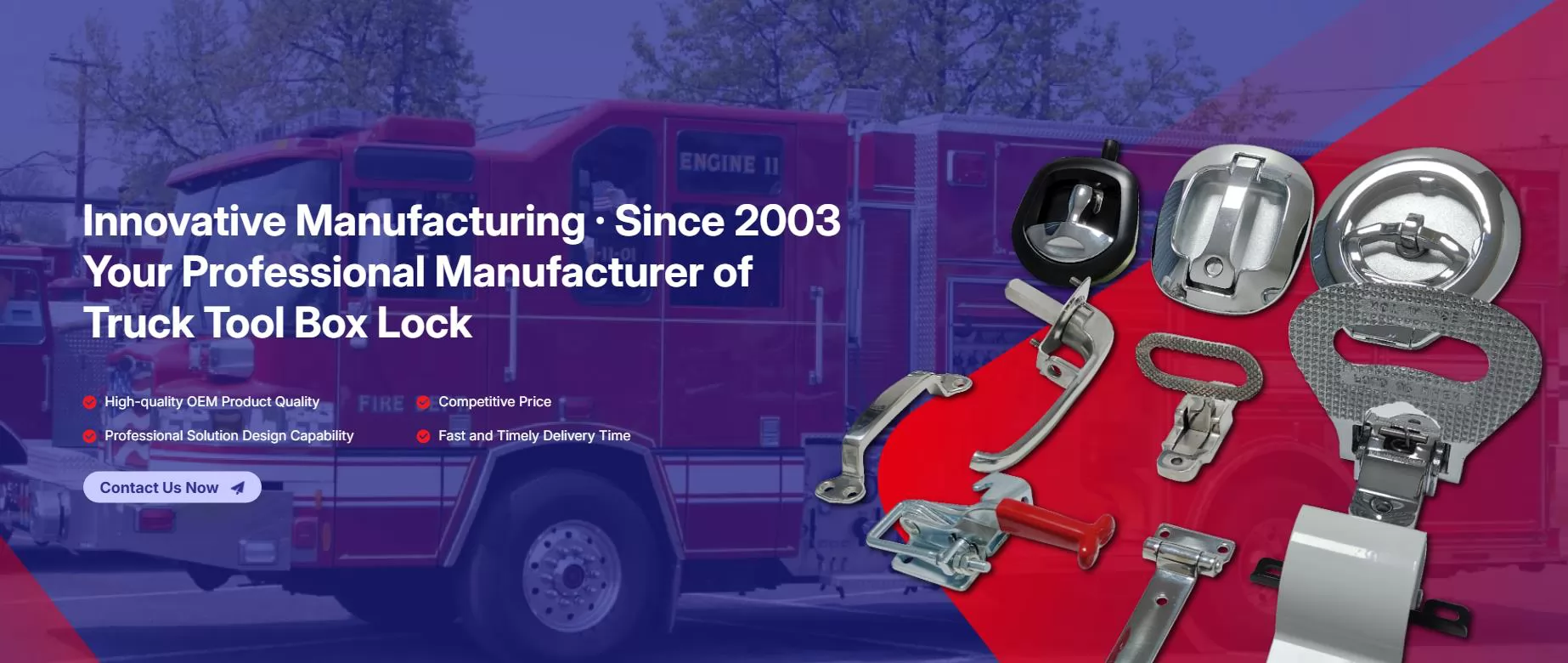
Since 2002, Ningbo East Sea Machinery Co., Ltd. has established itself as an industry leader in manufacturing high-quality locks, latches, and hinges for toolboxes, trucks, trailers, and special vehicles. By strictly adhering to international manufacturing standards, their products are purpose-built to withstand the harshest environmental conditions.
Whether you need a simple, reliable cylinder lock for a single truck or custom-engineered whale tail compression locks for an entire fleet, East Sea Machinery provides tailored, OEM-level solutions designed to secure your livelihood effectively and affordably.
Conclusion & Next Steps
Understanding the various types of toolbox locks is the first step toward safeguarding your equipment. The right locking mechanism can mean the difference between a secure investment and a costly theft. From versatile padlocks and flush cylinder locks to advanced biometric electronics and rugged whale tail compression latches, there is a tailored solution for every storage requirement.
By evaluating your security needs, environmental exposure, and daily workflow, you can make an informed, confident choice. Ready to upgrade your toolbox security? Browse industry-leading hardware and secure your assets today by reaching out to our expert team.
Get a Quote? We're Here For You!
0
Comments
Leave a Comment
Your email address will not be published. Required fields are marked *
Name can't be empty
Email error!
Message can't be empty
😍
😜
😳
😌
😄
😘
😝
😒
😃
😚
😚
😛
😟
😧
😀
😉
😓
😱
😤
😣
😂
😥
😩
😠
😢
😭
😰
😨
😡
😆
😪
😅
😐
😇
😋
😴
👿
😕
😏
😷
😵
😟
😮
😯
😑
👧
👴
😧
😬
😾
👶
👱
👵
👸
🙀
👺
👦
👩
👨
😽
😿
🙈
💩
💥
💤
😼
😹
🙉
🔥
✨
💦
👎
✌
👆
👈
💪
💹
👍
👊
💴
💶
💷
💸
👉
💵
🙏
🌎
🏧
👏
💳
👇
💑
🙆
🙅
💁
👫
👭
🙎
🙇
👑
👔
Submit Comment
Most Popular
-
 Dec 25, 2025Truck Tool Box Lock Won't Open? Complete Repair Guide 2026
 -
 Jul 29, 2026Top 10 Most Popular Pickup Truck Models in the Americas in 2026
 -
 May 29, 2026What Are the Different Types of Toolbox Locks?(Comprehensive Guide)
 -
 Oct 17, 2025Top 10 Truck Tool Box Lock Manufacturers in the World


Laster Blogs
-
 Sep 11, 2026Ambulance Door Handles Guide: Materials, Standards & OEM Solutions
 -
 Aug 15, 2026Truck Door Hinge: Complete Guide to Types, Materials, and Choosing the Right Supplier
 -
 Aug 12, 2026Ambulance Door Latch: Complete Guide to Emergency Vehicle Door Locking Systems
 -
 Aug 03, 2026Heavy Duty Truck Hinges: The Complete Guide to Materials, Types, and OEM Selection


Set A Consultation Today
Name can't be empty
Email error!
Send Your Message
*We respect your confidentiality and all
information are protected.

