Ambulance Door Latch: Complete Guide to Emergency Vehicle Door Locking Systems
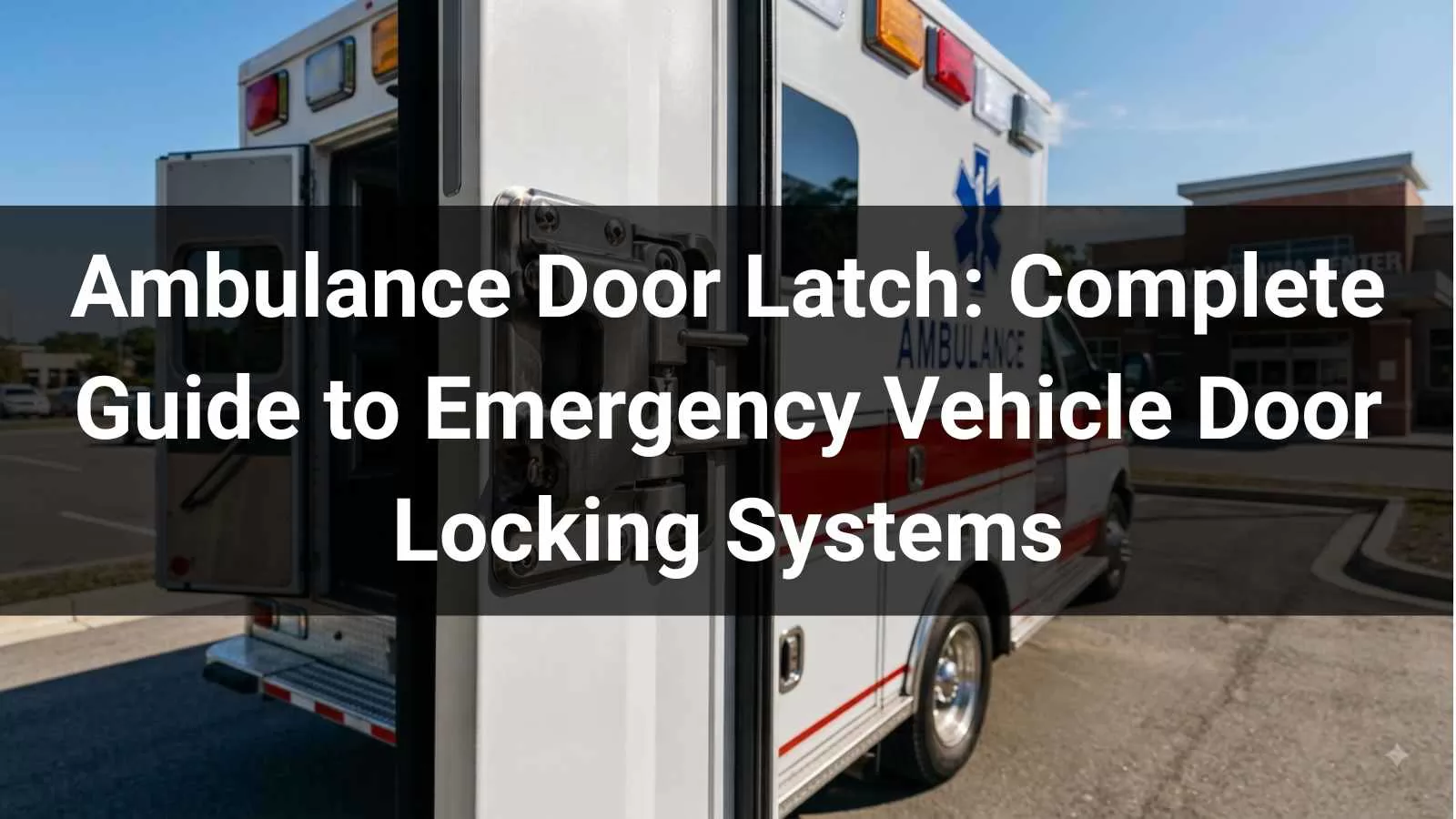
An ambulance is designed to provide fast, safe, and reliable medical transportation in emergency situations. Every component of an ambulance must perform consistently under demanding conditions, and the door system is no exception. Among these components, the ambulance door latch plays a critical role in maintaining vehicle safety, protecting medical personnel and patients, and ensuring secure operation during transportation.
Unlike standard vehicle door locks, ambulance door latches are engineered for more intensive use. Emergency vehicles often experience frequent door opening and closing, strong vibrations, harsh weather conditions, and high-pressure operating environments. A reliable latch system must keep doors securely closed while allowing quick and convenient access when emergency response requires it.
An ambulance door latch is not simply a locking component. It is part of a complete emergency vehicle door locking system that includes handles, locking mechanisms, strikers, and other hardware components. Together, these parts ensure that ambulance doors remain stable during driving while providing smooth operation for emergency teams.
For ambulance manufacturers, vehicle conversion companies, and emergency equipment suppliers, choosing the right door latch solution requires careful consideration of durability, materials, locking performance, corrosion resistance, and customization capability. A high-quality latch system can improve vehicle reliability, reduce maintenance requirements, and support long-term operational safety.
This guide explains how ambulance door latches work, the common types available, key material considerations, and important factors buyers should evaluate when selecting an emergency vehicle door hardware supplier.
Table of Contents
I. What Is an Ambulance Door Latch?
II. The Role of an Ambulance Door Latch
III. Door Handle vs Door Latch
IV. How Does the Latch System Work?
VI. Common Types of Ambulance Door Latches
VII. Materials Used for Ambulance Door Latches
VIII. Key Factors When Choosing
XI. Why Choose East Sea Machinery?
What Is an Ambulance Door Latch?
An ambulance door latch is a mechanical locking device designed to secure ambulance doors in a closed position while allowing controlled opening when required. It connects the door structure with the vehicle body and prevents unintended door movement caused by vibration, impact, or sudden vehicle motion.
In emergency vehicles, door latches are especially important because ambulance doors are frequently operated under challenging conditions. Rear compartment doors, side access doors, and equipment storage doors may be opened dozens of times every day. The latch must provide consistent performance throughout repeated operation cycles.
A typical ambulance door latch system includes several interconnected components:
- Latch mechanism: The core locking structure that holds the door securely.
- Handle assembly: The operating component used to activate the latch.
- Striker: A fixed component mounted on the vehicle frame that engages with the latch.
- Locking cylinder or actuator: Provides additional security and controlled locking functions.
- Internal release system: Allows operation from inside the vehicle when required.
Together, these components create a reliable ambulance door locking system that balances safety and accessibility.
The Role of an Ambulance Door Latch in Emergency Vehicles
The primary function of an ambulance door latch is to maintain secure door closure during vehicle operation. Emergency vehicles often travel at high speeds, operate on uneven roads, and experience continuous vibration. Without a properly designed latch system, doors may loosen, create noise, or even become unsafe during transportation.
A reliable ambulance door latch provides several important benefits:
Ensuring Patient and Equipment Safety
Ambulances transport valuable medical equipment and vulnerable patients. Secure door locking prevents unexpected opening and helps protect medical supplies, stretchers, and emergency tools stored inside the vehicle.
Supporting Emergency Response Efficiency
Emergency personnel need doors that can open quickly when arriving at an incident location. A well-designed latch allows smooth operation without sacrificing security.
Improving Vehicle Durability
High-quality latches reduce wear on doors and frames by maintaining proper alignment and reducing unnecessary movement during driving.
Handling Frequent Operation Cycles
Compared with passenger vehicles, ambulances require much more frequent door operation. Therefore, the latch system must be manufactured for long service life and repeated use.
Ambulance Door Handle vs Door Latch: What Is the Difference?
Although the terms ambulance door handle and ambulance door latch are sometimes used together, they refer to different components within the door system.
An ambulance door handle is the user-operated part that allows people to open or close the door. It provides the physical interface between the operator and the locking mechanism.
An ambulance door latch, however, is the internal mechanism responsible for holding the door securely in place. When the handle is operated, it activates the latch mechanism, allowing the door to disengage from the striker.
The relationship can be explained as:
Door Handle → Activates → Latch Mechanism → Releases → Door Opens
For vehicle manufacturers, understanding this difference is important because a durable handle alone cannot guarantee door security. The complete locking system must be designed as an integrated solution.
Many specialized vehicle hardware manufacturers provide combined handle and latch assemblies, such as I-Type Handle Lock systems, which integrate operating convenience with reliable locking performance.
How Does an Ambulance Door Latch System Work?
An ambulance door latch system operates through a combination of mechanical components that secure and release the door. Although designs may vary depending on vehicle requirements, the basic working principle remains similar.
When the door closes, the latch engages with the striker mounted on the vehicle body. This engagement creates a mechanical connection that keeps the door firmly closed during operation.
When an operator activates the handle, the latch releases from the striker, allowing the door to open. Additional locking mechanisms may be added to prevent unauthorized access or improve safety during transportation.
Main Components of an Ambulance Door Locking System
A complete ambulance door locking system typically consists of several key parts:
1. Latch Mechanism
The latch mechanism is the central component responsible for holding the door closed. It must withstand:
- Vehicle vibration
- Repeated impact
- Temperature changes
- Long-term mechanical stress
Heavy-duty latch designs are commonly used in emergency vehicles because reliability is more important than simple cost considerations.
2. Handle Assembly
The handle provides the operating interface for emergency personnel. A well-designed handle should offer:
- Easy gripping
- Smooth operation
- Reliable connection with the latch
In ambulance applications, handle design must balance accessibility with accidental activation prevention.
3. Striker Component
The striker is mounted on the vehicle frame and works together with the latch mechanism. Proper alignment between the striker and latch ensures:
- Secure engagement
- Reduced wear
- Smooth door operation
4. Locking and Security Components
Depending on the vehicle application, ambulance door latches may include:
- Key locking systems
- Mechanical locking devices
- Internal release mechanisms
- Electronic actuators
These features allow manufacturers to customize door security based on operational requirements.
How Latches Maintain Door Security During Vehicle Operation
Unlike ordinary vehicle doors, ambulance doors must remain secure under extreme conditions.
During transportation, doors are exposed to:
- Continuous vibration
- Road impacts
- Repeated acceleration and braking
- Weather exposure
A properly designed ambulance door latch prevents unwanted movement by maintaining a strong mechanical connection between the door and vehicle frame.
For this reason, emergency vehicle manufacturers typically select latches with:
- High mechanical strength
- Corrosion-resistant materials
- Stable locking performance
- Long operational lifespan
These characteristics ensure that ambulance doors remain dependable throughout the vehicle's service life.
Why Ambulance Door Latches Require Higher Safety Standards
Compared with standard vehicle door hardware, an ambulance door latch must meet much higher performance expectations. Ambulances operate in environments where reliability, speed, and safety are critical. A failure of the door locking system can create serious risks for patients, emergency personnel, and medical equipment.
For this reason, ambulance manufacturers and vehicle conversion companies usually select heavy-duty door hardware specifically designed for emergency and special-purpose vehicles.
A reliable emergency vehicle door latch must provide:
- Secure locking during transportation
- Smooth operation during emergency situations
- Resistance to vibration and impact
- Long service life under frequent use
- Protection against environmental exposure
The design requirements are not only related to the locking function itself but also include material selection, manufacturing precision, surface treatment, and quality control.
Preventing Accidental Door Opening
One of the most important functions of an ambulance door latch is preventing accidental door opening while the vehicle is moving.
Emergency vehicles frequently operate under demanding road conditions, including:
- High-speed driving
- Sudden braking
- Sharp turns
- Uneven roads
- Continuous vibration
A weak or poorly designed latch system may experience excessive movement, misalignment, or premature wear. Over time, these issues can affect door security.
High-quality ambulance door latches are designed with strong mechanical engagement between the latch and striker. This ensures that the door remains firmly secured even when exposed to external forces.
For ambulance builders, reliable locking performance is essential because rear doors and side doors are often used for patient access, medical equipment loading, and emergency operations.
Supporting Fast and Reliable Emergency Access
Although security is the primary function, ambulance door latches must also support rapid access.
Emergency responders need to open doors quickly when:
- Arriving at an accident scene
- Loading or unloading patients
- Accessing emergency equipment
- Performing urgent medical procedures
A good latch design provides a balance between:
- Secure locking during transportation
- Easy operation when needed
This is why many emergency vehicle manufacturers prefer integrated handle and latch solutions. These systems simplify operation while maintaining reliable locking performance.
An effective ambulance door locking system should never force operators to choose between safety and accessibility. Both functions must work together.
Protecting Medical Equipment and Patients
Ambulances contain sensitive medical equipment, including:
- Monitoring devices
- Oxygen systems
- Emergency tools
- Storage cabinets
- Patient support equipment
Door movement caused by poor locking performance can damage equipment or create additional safety concerns.
In addition, ambulance compartment doors and storage doors often require compact but durable latch solutions. These smaller locking components help keep medical supplies organized and protected during transportation.
Therefore, ambulance door hardware must be designed not only for vehicle access doors but also for various interior storage applications.
Common Types of Ambulance Door Latches
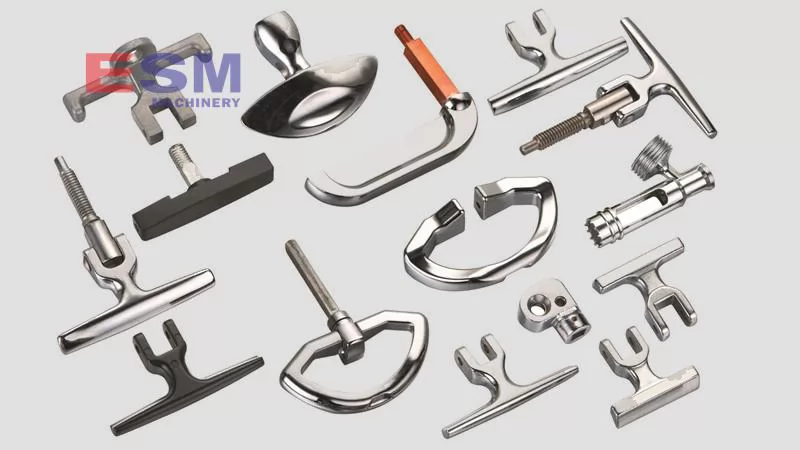
Different ambulance designs require different door locking solutions. The selection depends on factors such as door structure, vehicle type, operating environment, and customization requirements.
Common types of ambulance door latches include:
- I-Type Handle Lock Systems
- Rotary Latch Systems
- Compression Latches
- Compartment Door Latches
Each type provides different advantages depending on the application.
I-Type Handle Lock Systems
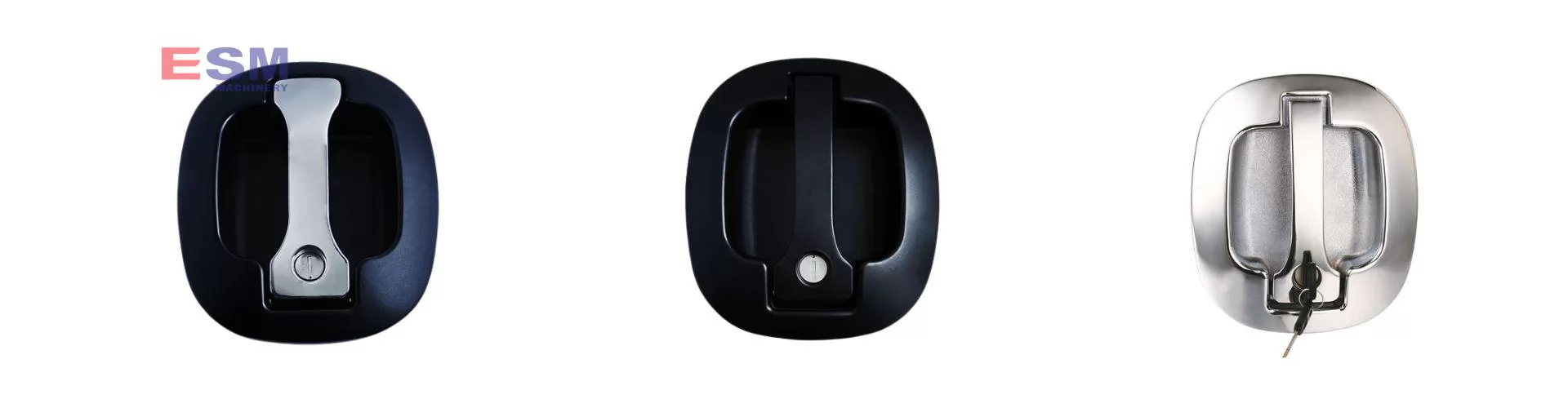
An I-Type Handle Lock System is a commonly used solution for special vehicles where compact design and reliable operation are required.
This type of system combines the handle and locking mechanism into one integrated assembly, allowing users to operate the door conveniently while maintaining secure closure.
Typical advantages include:
- Integrated handle and latch structure
- Simple installation
- Reliable locking performance
- Suitable for repeated operation
- Adaptability for OEM vehicle applications
For ambulance and emergency vehicle manufacturers, I-Type handle lock solutions can provide an effective balance between functionality and durability.
Manufacturers such as East Sea Machinery provide I-Type Handle Lock solutions designed for ambulance and special vehicle applications, supporting OEM customers who require reliable vehicle door hardware.
Rotary Latch Systems
Rotary latches are another common solution used in commercial and specialty vehicles.
The working principle involves a rotating mechanism that captures and secures the striker when the door closes.
Advantages of rotary latch systems include:
- Strong mechanical engagement
- Compact structure
- High durability
- Compatibility with different door designs
They are often used in applications where doors require strong holding force and reliable operation under vibration.
For emergency vehicles, rotary latches can be combined with external handles, locking cylinders, or electronic actuators depending on vehicle requirements.
Compression Latches
Compression latches are designed to provide both locking and sealing functions.
Unlike traditional latch systems, compression latches pull the door tightly against the frame during closing.
Key benefits include:
- Improved sealing performance
- Reduced vibration noise
- Better weather resistance
- Protection against dust and moisture
These characteristics make compression latches suitable for:
- Ambulance compartments
- Medical storage areas
- Outdoor emergency equipment enclosures
Cabinet and Compartment Door Latches
Ambulances contain many storage compartments that require secure but convenient access.
Cabinet and compartment door latches help protect:
- Medical supplies
- Emergency tools
- Electronic equipment
These latches are usually smaller than main vehicle door latches but still require:
- High cycle life
- Corrosion resistance
- Easy operation
Selecting suitable compartment latches helps ambulance manufacturers create safer and more organized vehicle interiors.
How to Select the Right Ambulance Door Latch Type
When choosing an ambulance door latch solution, buyers should consider several factors:
Vehicle Design
Different ambulance models have different door structures. The latch must match:
- Door thickness
- Mounting location
- Opening direction
- Weight requirements
Operating Frequency
Emergency vehicles experience frequent use. Components should be selected according to expected opening and closing cycles.
Environmental Conditions
Ambulances may operate in:
- Rain
- Snow
- Humid environments
- Coastal areas
- Extreme temperatures
Therefore, corrosion resistance and surface protection are important considerations.
Customization Requirements
OEM vehicle manufacturers often require customized solutions, including:
- Different dimensions
- Special mounting designs
- Surface finishes
- Branding requirements
A supplier with engineering and manufacturing capability can provide better long-term support.
Materials Used for Ambulance Door Latches
Material selection plays an important role in the performance and service life of an ambulance door latch. Because emergency vehicles operate in demanding environments, latch components must provide a combination of mechanical strength, corrosion resistance, and long-term reliability.
Unlike ordinary residential or passenger vehicle hardware, ambulance door latches are expected to withstand:
- Frequent opening and closing cycles
- Continuous vehicle vibration
- Temperature changes
- Moisture exposure
- Outdoor operating conditions
For this reason, manufacturers typically select engineering materials that can maintain stable performance throughout the vehicle lifecycle.
The most commonly used materials for ambulance door latch systems include zinc alloy, stainless steel, and aluminum alloy.
Zinc Alloy Ambulance Door Latches
Zinc alloy is widely used in vehicle hardware manufacturing because it provides a good balance between strength, durability, and manufacturing flexibility.
For ambulance door latch applications, zinc alloy offers several advantages:
High Mechanical Strength
Zinc alloy components can withstand repeated mechanical stress caused by frequent door operation and vehicle movement.
This makes them suitable for:
- Door handles
- Locking mechanisms
- Latch housings
- Vehicle hardware assemblies
Excellent Manufacturing Capability
Zinc alloy can be produced through precision casting processes, allowing manufacturers to create complex shapes with consistent dimensions.
This is especially valuable for OEM customers who require:
- Specific designs
- Stable production quality
- Large-volume manufacturing
Good Surface Treatment Performance
Zinc alloy components can receive various surface treatments, including:
- Electroplating
- Powder coating
- Protective finishes
These treatments improve corrosion resistance and enhance product appearance.
For special vehicle applications, proper surface protection helps extend the service life of door hardware exposed to outdoor environments.
Stainless Steel Door Latches
Stainless steel is another popular material choice for emergency vehicle door hardware.
Its main advantages include:
- Excellent corrosion resistance
- High durability
- Strong resistance to harsh environments
Stainless steel latches are particularly suitable for vehicles operating in:
- Coastal regions
- High humidity environments
- Heavy-duty outdoor applications
Although stainless steel components may have a higher material cost, they provide excellent long-term reliability in demanding conditions.
Aluminum Alloy Components
Aluminum alloy is commonly selected when lightweight construction is important.
Key benefits include:
- Low weight
- Natural corrosion resistance
- Good structural performance
For ambulance manufacturers looking to reduce overall vehicle weight while maintaining reliable door performance, aluminum components can provide an effective solution.
Key Factors When Choosing an Ambulance Door Latch
Selecting the correct ambulance door latch requires more than comparing product prices. Vehicle manufacturers and procurement teams need to evaluate technical performance, supplier capability, and long-term reliability.
A suitable latch solution should match the vehicle design, operating environment, and application requirements.
The following factors should be considered when selecting an ambulance door latch supplier.
Vehicle Compatibility
The first consideration is whether the latch is compatible with the target ambulance design.
Different vehicles may have different requirements regarding:
- Door structure
- Mounting position
- Door weight
- Opening direction
- Available installation space
A latch designed for one vehicle model may not directly fit another application.
Therefore, suppliers with OEM engineering capability are often preferred because they can provide customized solutions based on customer specifications.
Locking Performance and Durability
The primary function of an ambulance door latch is reliable locking performance.
Buyers should evaluate:
Mechanical Strength
The latch should maintain secure engagement under:
- Vehicle vibration
- Road impact
- Repeated operation
Service Life
Ambulance doors are opened frequently throughout daily operations.
A high-quality latch should support:
- Thousands of operating cycles
- Stable performance over time
- Reduced maintenance requirements
Operational Reliability
The latch should provide:
- Smooth opening
- Secure closing
- Consistent operation
A reliable mechanism reduces the risk of operational problems during emergency situations.
Corrosion Resistance and Surface Treatment
Ambulances are often exposed to outdoor conditions, making corrosion resistance an important factor.
When selecting an ambulance door latch, buyers should consider:
- Base material
- Surface coating
- Environmental exposure
- Maintenance requirements
Common protective treatments include:
- Electroplating
- Powder coating
- Anti-corrosion coatings
Proper surface treatment improves durability and helps maintain appearance during long-term use.
OEM Customization Capability
Many ambulance manufacturers and vehicle converters require customized hardware solutions.
A professional ambulance door latch manufacturer should be capable of supporting:
- Custom dimensions
- Modified structures
- Special mounting requirements
- Different surface finishes
- Private labeling options
OEM capability is especially important for companies producing specialized vehicles because standard off-the-shelf components may not always meet their design requirements.
A supplier with in-house engineering, tooling, and production capabilities can provide faster development and better quality consistency.
Ambulance Door Latch Manufacturing Process
The manufacturing process directly affects the quality and reliability of an ambulance door latch.
Professional vehicle hardware manufacturers typically control multiple production stages, including material selection, forming, machining, surface treatment, and inspection.
Material Selection and Component Production
The first stage involves selecting suitable materials according to application requirements.
Manufacturers evaluate:
- Strength requirements
- Corrosion resistance
- Weight considerations
- Production feasibility
Depending on the design, components may be produced through:
- Precision casting
- CNC machining
- Metal forming
- Assembly processes
Accurate manufacturing ensures that latch components fit correctly and operate smoothly.
Surface Treatment and Quality Inspection
After component production, surface treatment is applied to improve durability.
Common processes include:
- Electroplating
- Powder coating
- Protective finishing
Quality inspection typically checks:
- Surface appearance
- Dimensional accuracy
- Assembly performance
- Mechanical operation
These inspections help ensure that every latch meets customer requirements before delivery.
Testing Before Delivery
Before being supplied to vehicle manufacturers, ambulance door latches should undergo performance testing.
Testing may include:
- Opening and closing cycle tests
- Load testing
- Locking reliability tests
- Corrosion resistance evaluation
For OEM customers, consistent quality control is essential because door hardware directly affects vehicle safety and user experience.
Applications of Ambulance Door Latch Systems
An ambulance door latch is primarily designed for emergency medical vehicles, but its application extends beyond traditional ambulances. Many special-purpose vehicles require the same combination of secure locking, durability, and easy operation.
As vehicle designs continue to evolve, reliable door hardware has become an essential component across various emergency and professional transportation applications.
Ambulances
The most common application is standard ambulance vehicles.
Ambulances require dependable door locking systems for:
- Rear patient compartment doors
- Side access doors
- Driver cabin doors
- Medical equipment storage areas
In these applications, the latch system must provide secure closure during transportation while allowing emergency personnel to access the vehicle quickly when needed.
Emergency Rescue Vehicles
Fire rescue vehicles, disaster response vehicles, and other emergency service vehicles also require heavy-duty locking solutions.
These vehicles often operate in extreme environments and carry specialized equipment. Door latches must withstand:
- Frequent operation
- Heavy vibration
- Outdoor exposure
- Emergency working conditions
Reliable emergency vehicle door latches help ensure that equipment remains protected and accessible.
Mobile Clinics and Medical Transport Vehicles
Mobile healthcare units and medical transport vehicles also benefit from specialized door hardware.
These vehicles often contain:
- Medical cabinets
- Storage compartments
- Mobile treatment equipment
Secure latch systems help prevent unwanted movement of stored items during transportation while maintaining convenient access for medical personnel.
Special Purpose Vehicles
Beyond healthcare applications, similar latch technologies are used in:
- Mobile laboratories
- Utility vehicles
- Service vehicles
- Inspection vehicles
- Custom-built specialty vehicles
These applications share common requirements for durable, secure, and customizable vehicle hardware.
Why Choose East Sea Machinery for Ambulance Door Latch Solutions?
Selecting the right ambulance door latch manufacturer is an important decision for vehicle builders and OEM customers. A reliable supplier should provide not only quality products but also engineering support, customization capability, and consistent manufacturing performance.
East Sea Machinery specializes in vehicle hardware solutions, including locks, latches, handles, and related components for commercial and special-purpose vehicles.
With experience in automotive hardware manufacturing, the company provides solutions designed for applications where reliability and durability are essential.
Experience in Vehicle Hardware Manufacturing
Vehicle hardware requires a deeper understanding of mechanical performance, installation requirements, and long-term durability.
East Sea Machinery focuses on developing and manufacturing products such as:
- Vehicle door locks
- Door handles
- Latch systems
- Toolbox locks
- Special vehicle hardware components
This product experience allows the company to support customers looking for dependable locking solutions for different vehicle applications.
Ambulance Door Handle and Latch Solutions
For ambulance and emergency vehicle applications, East Sea Machinery provides I-Type Handle Lock solutions designed for secure and convenient door operation.
These solutions are suitable for applications requiring:
- Reliable locking performance
- Durable construction
- Compact installation
- Repeated daily operation
An integrated handle and latch design helps simplify vehicle door systems while maintaining the safety requirements expected from emergency vehicles.
For manufacturers searching for an ambulance door latch supplier, choosing a supplier with both product experience and customization capability can reduce development risks and improve production efficiency.
OEM and Custom Manufacturing Capability
Emergency vehicle manufacturers often require customized hardware rather than standard products.
OEM support may include:
- Customized dimensions
- Structural adjustments
- Material selection
- Surface treatment options
- Production volume support
A capable vehicle hardware supplier can work with customers during product development to ensure the latch solution matches the vehicle design.
For global ambulance manufacturers and special vehicle builders, this flexibility is especially valuable because different markets may have different vehicle configurations and requirements.
Frequently Asked Questions About Ambulance Door Latches
Conclusion
An ambulance door latch is a critical component that directly affects emergency vehicle safety, reliability, and operational efficiency. Unlike ordinary vehicle door hardware, ambulance latch systems must withstand frequent use, vibration, environmental exposure, and demanding operating conditions.
When selecting an emergency vehicle door latch solution, buyers should consider:
- Locking reliability
- Material performance
- Corrosion resistance
- Manufacturing capability
- OEM customization support
A professional vehicle hardware manufacturer can provide not only durable latch products but also technical support throughout the vehicle development process.
For ambulance manufacturers, emergency vehicle builders, and special-purpose vehicle companies, choosing the right latch supplier is an important step toward creating safer and more reliable vehicles.
Get a Quote? We're Here For You!
0
Comments
Leave a Comment
Your email address will not be published. Required fields are marked *
Name can't be empty
Email error!
Message can't be empty
😍
😜
😳
😌
😄
😘
😝
😒
😃
😚
😚
😛
😟
😧
😀
😉
😓
😱
😤
😣
😂
😥
😩
😠
😢
😭
😰
😨
😡
😆
😪
😅
😐
😇
😋
😴
👿
😕
😏
😷
😵
😟
😮
😯
😑
👧
👴
😧
😬
😾
👶
👱
👵
👸
🙀
👺
👦
👩
👨
😽
😿
🙈
💩
💥
💤
😼
😹
🙉
🔥
✨
💦
👎
✌
👆
👈
💪
💹
👍
👊
💴
💶
💷
💸
👉
💵
🙏
🌎
🏧
👏
💳
👇
💑
🙆
🙅
💁
👫
👭
🙎
🙇
👑
👔
Submit Comment
Most Popular
-
 Dec 25, 2025Truck Tool Box Lock Won't Open? Complete Repair Guide 2026
 -
 Jul 29, 2026Top 10 Most Popular Pickup Truck Models in the Americas in 2026
 -
 May 29, 2026What Are the Different Types of Toolbox Locks?(Comprehensive Guide)
 -
 Oct 17, 2025Top 10 Truck Tool Box Lock Manufacturers in the World


Laster Blogs
-
 Sep 11, 2026Ambulance Door Handles Guide: Materials, Standards & OEM Solutions
 -
 Aug 15, 2026Truck Door Hinge: Complete Guide to Types, Materials, and Choosing the Right Supplier
 -
 Aug 12, 2026Ambulance Door Latch: Complete Guide to Emergency Vehicle Door Locking Systems
 -
 Aug 03, 2026Heavy Duty Truck Hinges: The Complete Guide to Materials, Types, and OEM Selection


Set A Consultation Today
Name can't be empty
Email error!
Send Your Message
*We respect your confidentiality and all
information are protected.

