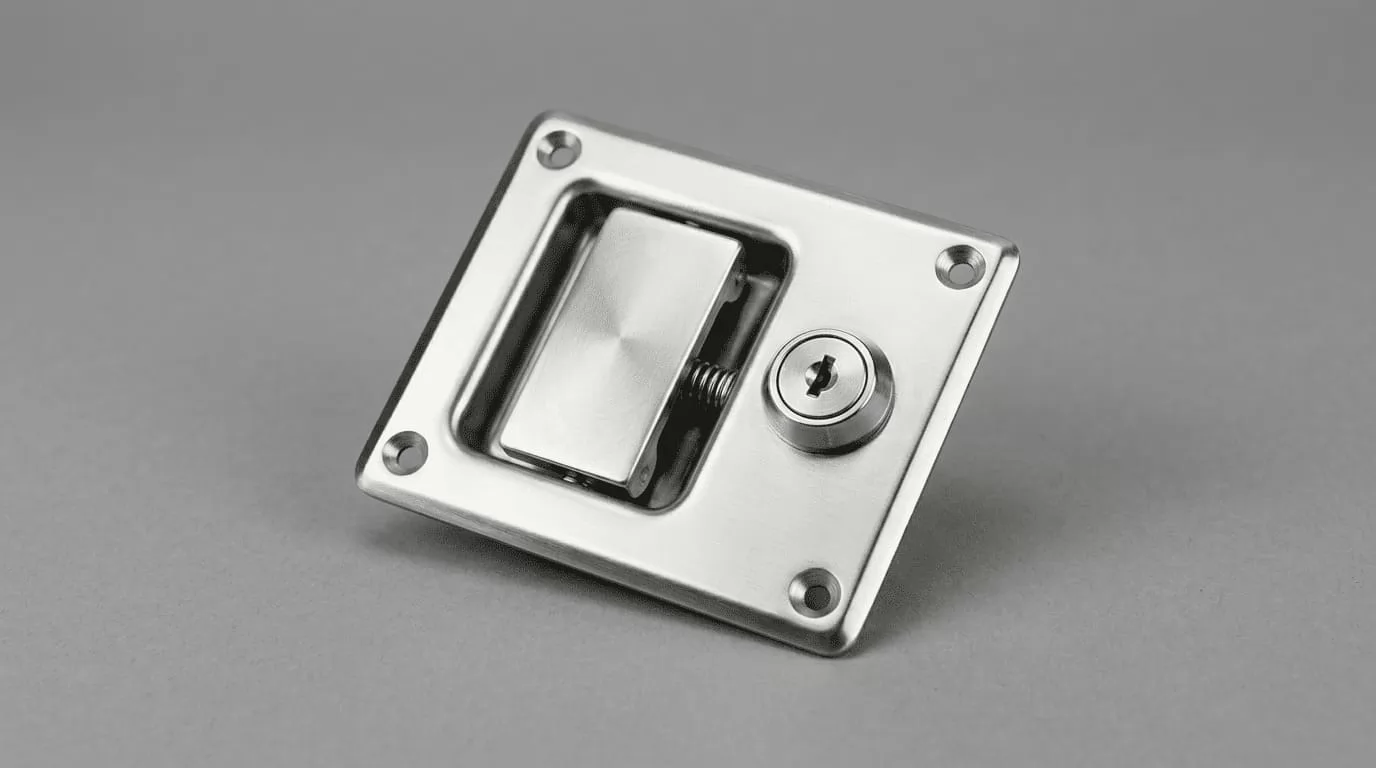
Paddle Latch Force Reduction: How We Cut Operation Force 30–40% for a Canadian Truck Toolbox Partner
Ningbo East Sea Machinery Co., Ltd (ESM) has been a professional manufacturer of truck tool box locks, latches, hinges, folding steps, and handles since 2002. When a Canadian OEM reported that our Model 19305 paddle latch (polished stainless steel paddle latch lock) felt too stiff in the field, we turned the feedback into a fast, physics-based customization—delivering two spring options that reduced operating force by roughly 30% to 40% without compromising lock security or return stability. This case study explains why latch “hand feel” matters for commercial and recreational vehicles, how we diagnosed and solved the issue, and why operating force tuning is now a standard part of our OEM/ODM offer for truck tool box latches and related hardware.
Why Latch Feel Matters for Truck Toolboxes and Industrial Cabinets
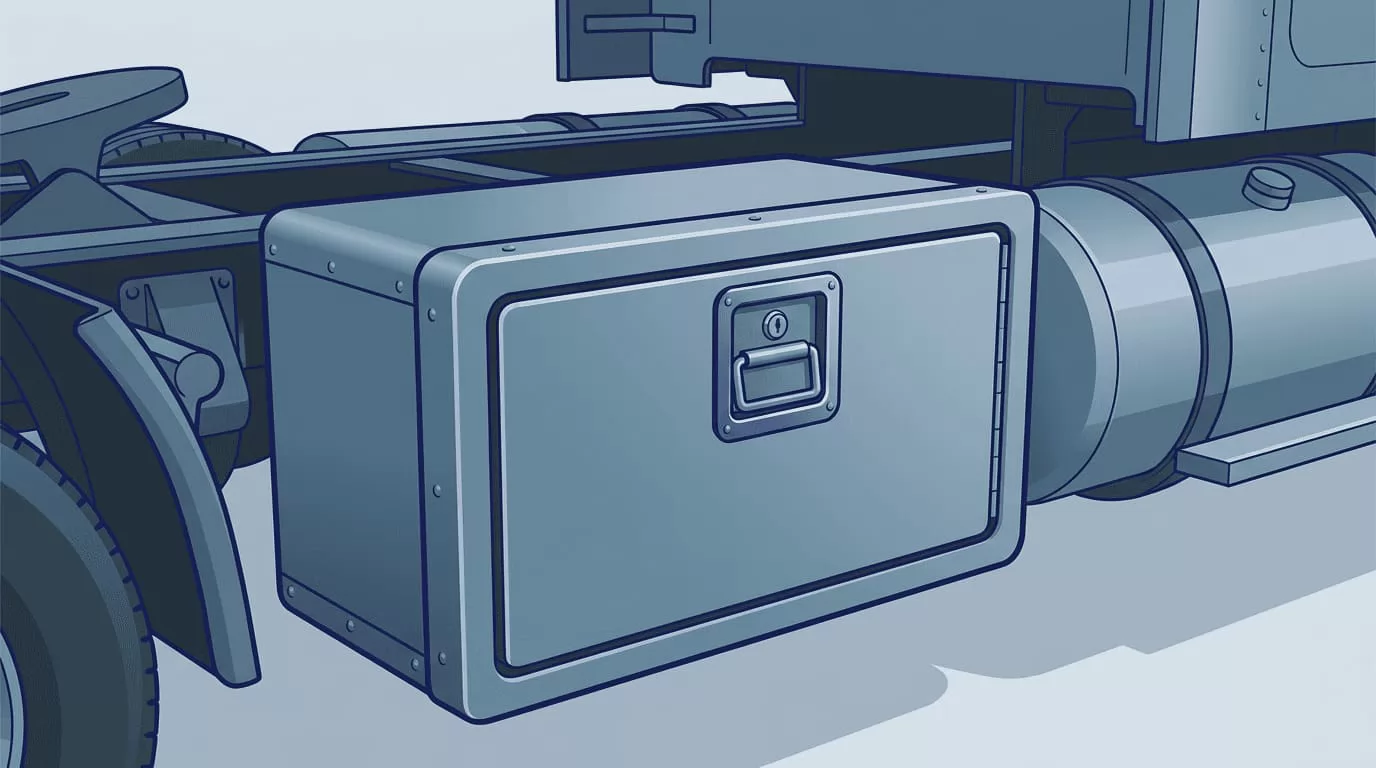
Truck tool box locks and paddle latches are used dozens of times per day by technicians, drivers, and field crews. When the force required to open and close a latch is too high, users notice it immediately: hands and wrists tire faster, and in cold or wet conditions—or when wearing gloves—the problem gets worse. For OEMs building high-end truck toolboxes, RVs, or industrial cabinets, a stiff latch can undermine the perceived quality of the whole product. Buyers increasingly expect “premium” hardware to feel smooth and responsive, not heavy or gritty. At East Sea Machinery, we treat operating force and ergonomics as part of the product specification, not an afterthought. The Canadian project was a clear example: the client already used our 19305 paddle latch but needed a lighter, more glove-friendly feel without sacrificing reliability.
Customer Feedback: Operation Force Too High
The client reported that the 19305 paddle latch required too much force to open and close. They asked for a 30%–40% reduction in operating force to improve daily use, especially in cold weather when operators wear thick gloves.
- User experience: Compared with other products on the market, the high spring tension made the lock feel heavy to operate; repeated use led to fatigue. Fleet and workshop feedback indicated that drivers and technicians preferred a lighter, more responsive action.
- Environment: In Canada’s cold climate, workers often use heavy gloves. A stiff mechanism made the latch harder to operate and less smooth, and in some cases users had to use both hands or brace the box to get enough leverage—unacceptable for a daily-use truck tool box lock.
- Market positioning: The OEM targets premium truck and utility segments where “easy to use” is a selling point. They needed the latch to match the rest of the product’s quality story.
We took the request seriously: rather than offering a generic “softer” version, we committed to a defined force-reduction range (30%–40%) and to keeping latch security and return behavior within spec.
Root Cause: Spring Stiffness and Why We Couldn’t Just “Loosen” the Lock
The standard 19305 uses a 1.6 mm diameter high-stiffness extension spring. That spring does two jobs: it resists the user when opening (creating the “feel” of the latch), and it returns the latch mechanism firmly so the door or lid closes and stays closed. If we simply used a much weaker spring, we could achieve a lighter pull—but the latch might not return fully, or the bolt might not seat correctly, compromising security and weather sealing. Vibration on the road could also cause a weak latch to rattle or drift open. So the challenge was clear: reduce the force the user feels by 30%–40% while keeping return speed and closure reliability within acceptable limits.
Our engineering team reviewed the torque and stroke of the 19305 mechanism and ran calculations for different spring wire diameters. The goal was a stepwise reduction: offer the customer two calibrated options (moderate and maximum light-touch) so they could validate in real trucks and toolboxes before committing to a production spec.
Engineering Response: 24-Hour Turnaround and a “Menu-Style” Solution
Our R&D team picked up the request within 24 hours. We ran torque and force simulations and then implemented a spring-based tuning strategy: the latch body, pawl, and mounting geometry stayed unchanged, so no new tooling or part numbers were required. Only the extension spring changed—different wire diameters gave us different force curves. This approach minimized risk and lead time while giving the customer clear, testable options.
Two Custom Options for Validation
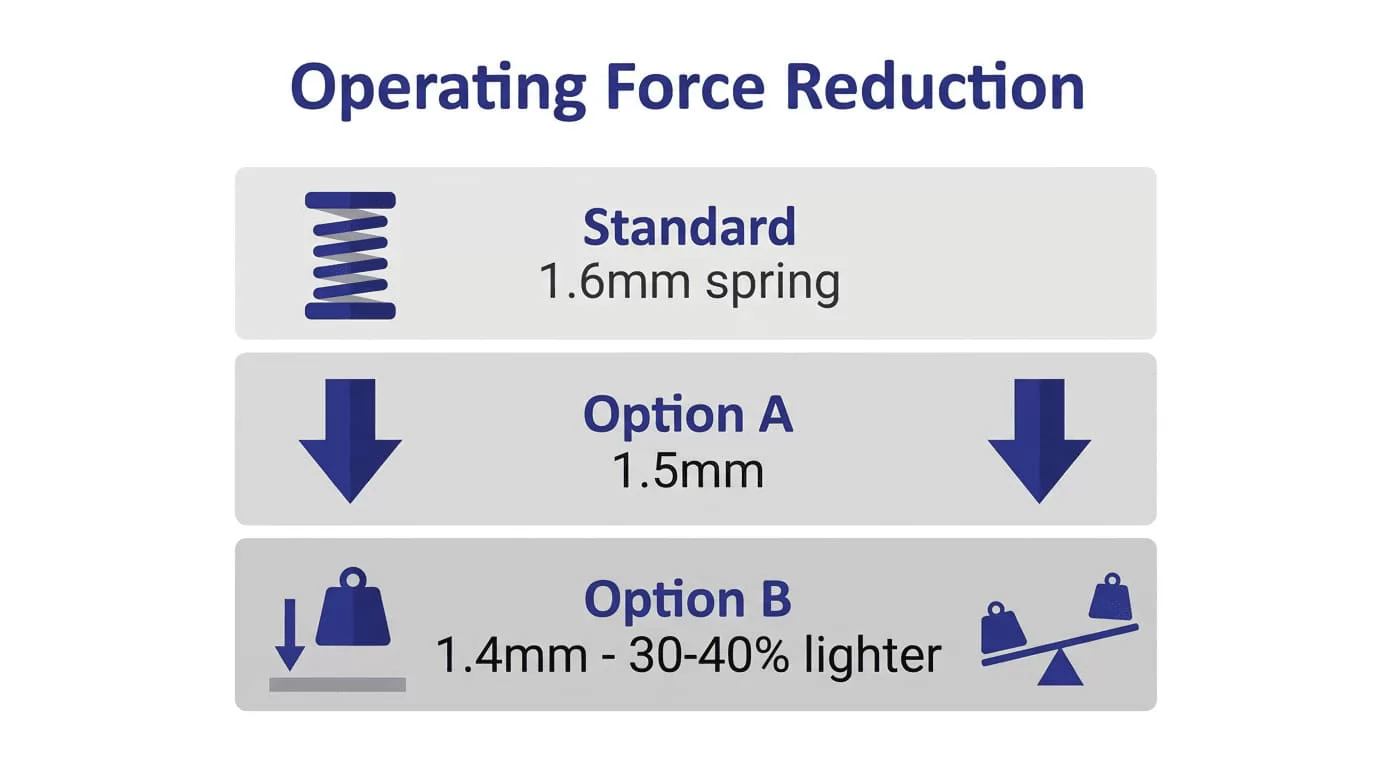
We supplied the customer with clearly labeled samples so they could test in real installation conditions:
- Option A (1.5 mm spring): Moderate force reduction—balances snappy return with smoother, lighter operation. Ideal when you want a noticeable improvement in feel without going to the lightest possible setting. Suits toolboxes and doors that see moderate vibration and frequent use.
- Option B (1.4 mm spring): Maximum light-touch feel—meets the 30%–40% force reduction target for glove-friendly use. Best for cold-climate and glove-heavy applications where minimizing effort is the priority. We validated that return and closure remained reliable under normal use and vibration.
This “menu-style” approach let the client choose the best fit for their application without changing tooling or part geometry. They could run the samples on actual truck boxes in Canadian winter conditions and then lock in the preferred option for production orders.
Why Spring Tuning Works Without Changing the Latch Design
Paddle latches like the 19305 rely on a spring to control both the opening resistance and the return force. The spring is a calibrated component: same material and same stroke, but a thinner wire diameter yields lower force. By switching from 1.6 mm to 1.5 mm or 1.4 mm, we shifted the entire force curve down while keeping the mechanism’s kinematics the same. That’s why we could promise a 30%–40% reduction in operating force with high confidence—it’s a direct result of the spring’s load-deflection behavior. At the same time, we kept the spring long enough and with enough preload so that the latch still returns positively and the bolt engages correctly. This balance is what makes “hand feel” customization viable as a standard option for our truck tool box latches and other lock products.
Outcome and Client Feedback
The customer appreciated the quick, structured response and the fact that a small change (spring swap) delivered a big improvement in feel. They were able to test both options in the field and select Option B (1.4 mm) for their Canadian-market toolbox line. They reported that operators noticed the difference immediately—less effort, smoother action, and no issues with closure or security. The client saw the project as strong proof of ESM’s willingness to adapt standard products to regional and ergonomic needs without long lead times or minimum-order hurdles. For us, it reinforced the value of treating “operating force” as a spec that can be tuned like material, finish, or key type.
Going Forward: Ergonomic Tuning as a Standard Option
We now treat operating force and “hand feel” as a standard customization dimension for paddle latches and related truck tool box locks and latches. When you order the 19305 or other ESM latches, you can specify standard, moderate, or light-touch force curves—or request custom spring specs for a target force range. No need to justify it as a special project; we treat it as part of normal OEM/ODM support.
- North America: High-end truck toolboxes, RV and camper builds, and aftermarket utility equipment where smooth, light operation supports a premium feel. Cold-climate and glove-heavy use cases are a natural fit for the light-touch option.
- Europe: Industrial cabinet and body builders with strict ergonomic and accessibility requirements often need predictable, low-force operation for compliance and user satisfaction. Our 1.5 mm and 1.4 mm options are well suited to these specs.
We recommend discussing your application (vehicle type, environment, glove use, and quality expectations) with our team so we can suggest the right force curve and, if needed, provide labeled samples for your own validation.
How to Specify Custom Latch Feel for Your Project
If you’re integrating truck tool box locks or paddle latches into a new product, here’s what helps us respond quickly:
- Target force: A range (e.g. “30% lighter than current”) or a comparison to another product you like helps us pick the right spring.
- Use case: Cold weather, gloves, high cycle count, or premium positioning all influence whether we suggest standard, moderate, or light-touch.
- Validation: We can supply labeled samples (as we did for the Canadian client) so you can test in your own environment before committing.
No change to part geometry or tooling is required for force tuning—only the spring specification changes, so lead times and cost impact are minimal.
East Sea Machinery: Your OEM Partner for Truck Tool Box Locks and Latches
If you need a custom paddle latch or truck tool box lock with tailored force curve, materials, or finish, East Sea Machinery offers full OEM/ODM support—from design and sampling (e.g. within about 30 working days) to batch production and quality control. We manufacture truck tool box locks, truck tool box latches, truck door hinges, truck door handles, folding steps, and slide bolts for commercial vehicles, RVs, trailers, and industrial cabinets. Our 8,000 m² facility in Ningbo and 100+ skilled workers support casting, stamping, CNC, and sheet metal fabrication under ISO9001 certification. We serve partners in the USA, Canada, Australia, and Europe with over 20 years of experience in vehicle and industrial hardware, and we’ve delivered more than 10 million OEM units to global customers.
Related product: Polished Stainless Steel Paddle Latch Lock – Model 19305 (see Truck Tool Box Latches for the full range of latches and locks).
Contact East Sea Machinery for a quote or to discuss your latch and lock requirements—including custom operating force for your market and application.


